
Software Development Outsourcing & Subcontracting
Outsourced software development for companies, software houses and agencies that need external development support for projects, features, integrations or existing systems.
Service detailsAn existing system does not need to be replaced simply because the code has aged, performance has declined or new features have become difficult to add. DEVPLANX reviews what already exists, identifies the parts holding the system back and modernizes them in focused stages.
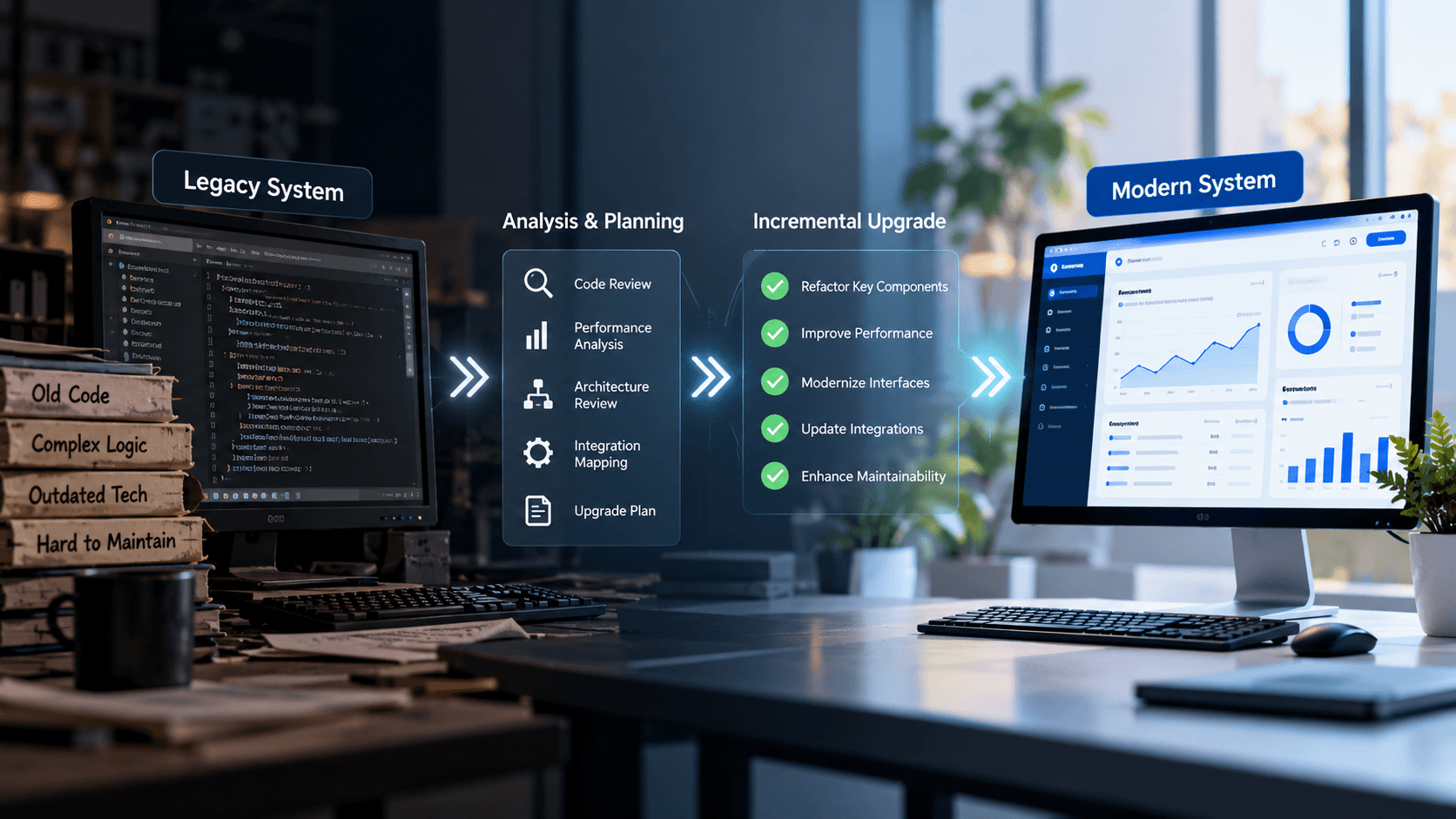
Many software systems continue operating for years, but eventually even small changes begin taking too long. The code becomes harder to maintain, new features affect unrelated areas, integrations become more difficult and the system starts limiting the business instead of supporting it.
A complete rewrite is not always the right answer. In many cases, a safer and more practical approach is to understand what already works, identify the areas creating the biggest problems and modernize them gradually.
We review areas that are difficult to maintain, duplicated logic and dependencies that make development unnecessarily complicated. Where appropriate, these areas can be refactored gradually without changing parts that already work well.
Older interfaces can be improved for usability, mobile support, performance and workflows that currently create unnecessary friction for users.
Server-side code, business processes, data handling and areas that have become difficult to extend can be improved selectively.
We can investigate bottlenecks in application code, databases, API requests and processes that consume more resources than necessary.
Existing applications can be connected to newer services through APIs, or outdated integrations can be replaced where they limit future development.
Components that create genuine technical limitations can be replaced progressively instead of forcing a risky all-at-once migration.
An existing application usually contains years of business decisions, workflows and edge cases that may not be documented. The first step should therefore be understanding the current system rather than immediately writing replacement code.
We review the codebase, architecture, dependencies and the areas causing problems. Only then can we decide what should remain, what should be improved and what genuinely needs to be replaced.
Rebuilding an application from scratch can sometimes appear easier than working with legacy code, but it also introduces risk. Existing functionality can be missed, business rules can be lost and significant development time may be spent recreating features that already work.
Whenever practical, we prefer focused and progressive modernization: improve the areas with the greatest impact first, validate the results and continue from there.
Depending on the application and its requirements, modernization can include React, Next.js, Node.js, TypeScript, APIs, databases and external services alongside existing parts of the system.
A technology does not need to be replaced simply because it is old. The important question is whether it creates real limitations in performance, maintainability, security or future development.
We examine the codebase, architecture, technologies and the problem that triggered the modernization requirement.
We separate genuine technical problems from parts of the system that do not need to change.
We begin with changes that can provide meaningful value relative to their effort and risk.
The selected areas are improved while testing that existing behavior continues to work correctly.
Modernization does not need to happen in one large project. It can continue progressively based on results, priorities and budget.
DEVPLANX can also review systems that were developed elsewhere. We first determine whether the existing codebase can be understood and continued before recommending major changes.
Good modernization should reduce the friction that prevents a business from evolving its software: fewer risky changes, less time spent fighting recurring problems and a better foundation for future functionality.
If you already have a working system but are unsure whether it needs targeted upgrades or a larger rebuild, we can start by reviewing the current situation before deciding what should happen next.
No. Many existing systems can be improved progressively. We first review the codebase, dependencies and current problems before deciding whether targeted improvements, broader modernization or a rebuild makes sense.
Yes. We can review systems developed by another developer or company. The first step is understanding the architecture and codebase before committing to changes.
We prioritize the areas creating the greatest business or technical friction, such as performance bottlenecks, recurring failures, difficult feature development or components preventing new integrations.
Yes. A phased approach can reduce risk, allow each improvement to be tested and spread the investment across multiple stages.
It depends on the architecture and the changes required. One of the planning goals is to minimize disruption to a live system and introduce changes in a controlled way.
Cost depends on the condition of the codebase, system size, problems that need to be solved and the scope of modernization. After an initial review, the work can be prioritized and estimated.
Outsourced software development for companies, software houses and agencies that need external development support for projects, features, integrations or existing systems.
Service detailsCustom business management systems, CRM platforms, client portals and internal web applications designed around your workflows, users and data.
Service detailsConnect forms, inquiries, management systems and business tools. Reduce repetitive data entry and streamline workflows with tailored automation and AI where it adds value.
Service detailsTell us what the system does, what is causing problems today and what you want to improve. We will start by understanding the existing application before deciding whether it needs a focused fix, progressive modernization or a broader change.